
+98 9017345626
info@nazarinuts.com
Nazari International Trade cooperation logo
  • NITC Home
  • Products
    • Inshells Pistachio
      • Ahmad Aghaei (Long)
      • Akbari (Super Long)
      • Kalleghuchi (Jumbo)
      • Badami (Semi Long)
      • Fandoghi (Round)
      • NITC In-Shell Pistachio Grading
    • Pistachio Kernels
      • Kaal Kernels (Green)
      • Ghazvini Kernels
      • Fandoghi Kernels
      • Ahmad Aghaei Kernels
      • NITC Pistachio Kernel Grading
    • Olives
      • Salted Olives
      • Olive Oil
    • Blueberries
      • Fresh Blueberries
      • Blueberry Jam
    • Jujubes
    • Baby Ginger
    • Turmeric
  • Contact Us
  • Why Us
  • About Us
    • Our Holding
    • NITC Journey
    • NITC’s Evolution Story
  • Learn
    • Education
    • Glossary

Pistachio Sizing

نوشته شده در  Yesterday at 12:23 pm
No Comments

How to Size Pistachio

Have you ever wondered how professionals determine the size and quality of pistachios? Fortunately, you can use the same simple, standardized method yourself. This method requires no special instruments—just a basic kitchen scale and a minute of your time.

In this guide, we will walk through a clear, four-step process. First, you measure a precise weight of pistachios. Next, you sort them into small, equal groups. Then, you count those groups to find your key number. Ultimately, this number reveals the size grade of your nuts, with a simple, consistent rule: a lower number indicates larger, higher-quality pistachios.

Step 1: Weigh a Fixed Amount
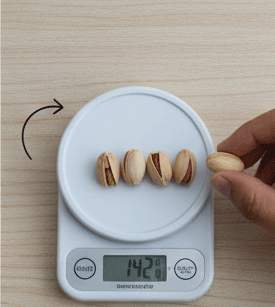
142 Grams of pistachio

Take exactly 142 grams of in-shell pistachios. You can use a small kitchen scale for this. This weight is the starting point for everyone, so all comparisons are fair.

To get a true “ounce” size, your 142-gram sample must fairly represent the whole batch.

  • Follow these 4 steps:
  • Mix First: Gently shake or stir your main container of pistachios.
  • Scoop Generously: Take a slightly larger amount (about 150–160g) from the mixed batch.
  • Weigh & Trim: Place the scoop on your scale and remove nuts one by one until the scale reads exactly 142.0g.
  • Why It Works: This method removes selection bias—your final sample is a true random mix, not just nuts from the top or bottom.
  • Result: Your count will accurately reflect the average size of all the pistachios in your batch.

Step 2: Make Groups of Five
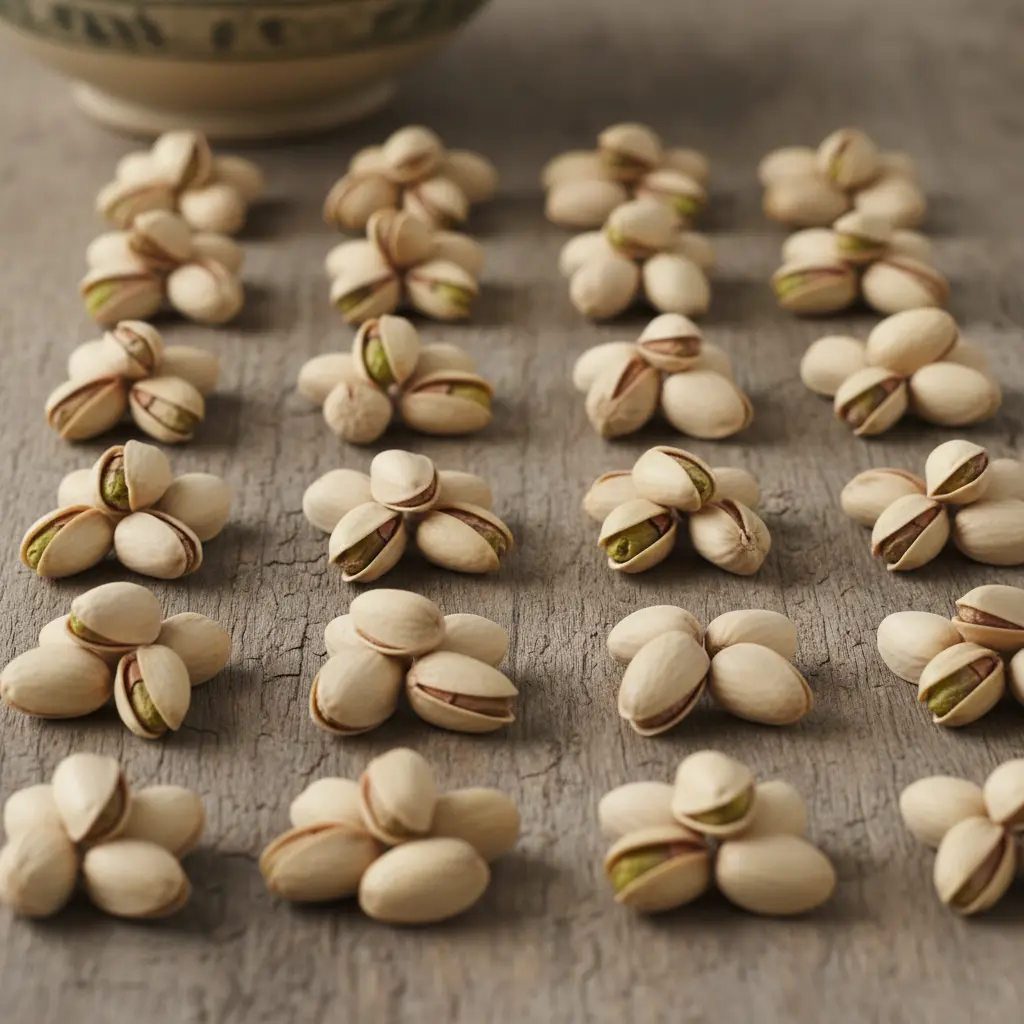
pistachios divided into groups of 5

From your 142-gram pile, start counting the pistachios out loud. Put them into small piles or rows. Every time you count 5 pistachios, set that group aside. Keep doing this until you’ve sorted all the pistachios from the original 142 grams.

Step 3: Count the Groups
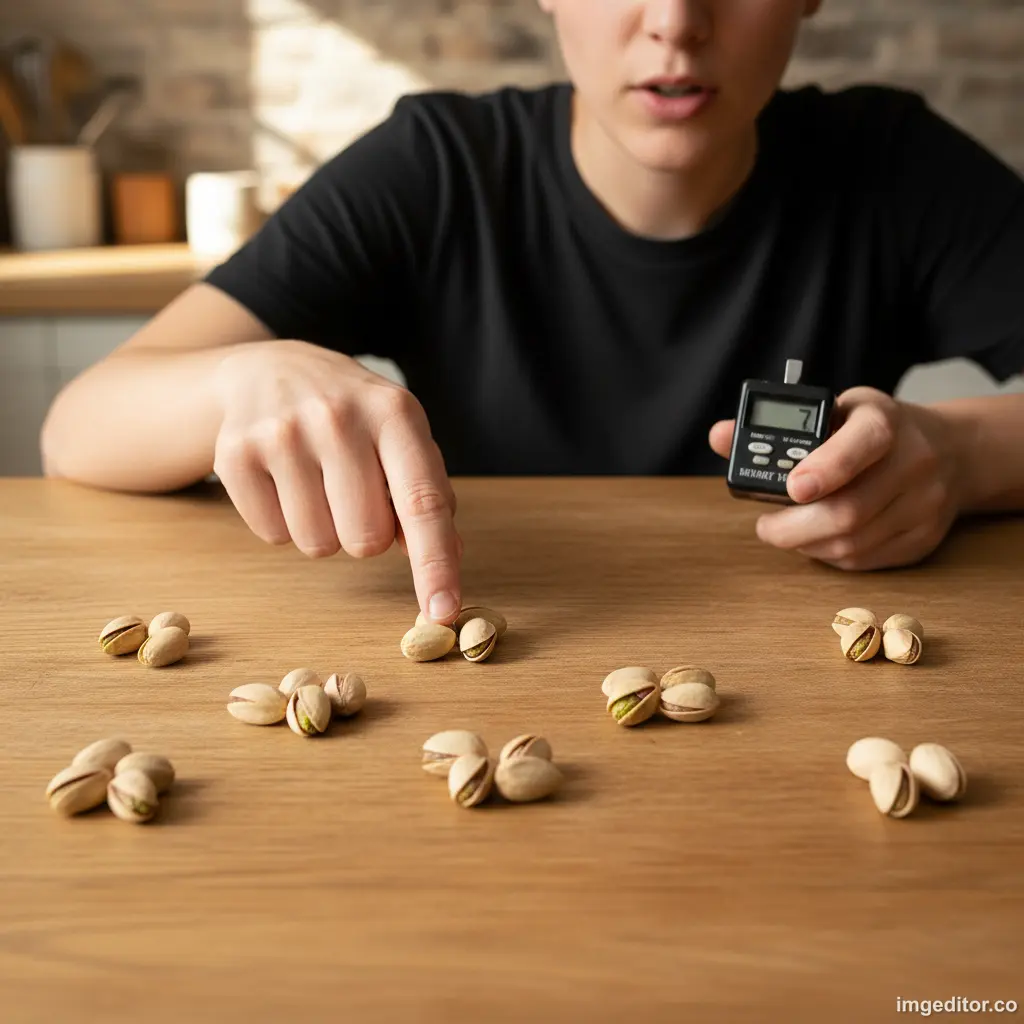
Now, look at all the groups of five you made. Simply count how many groups you have.
For example, you might end up with 22 groups, or 26 groups, or 30 groups.

Excellent question. When someone says pistachios are “18–20”, it means they are exceptionally large and premium—only about 90 to 100 individual nuts make up the standard 142-gram weight. Conversely, a size of “28–30” indicates a medium or commercial grade; these nuts are noticeably smaller, requiring about 140 to 150 of them to reach that same 142 grams. Simply put, the lower the number, the larger and more valuable the pistachio.


Step 4: This is your ounce number.

The number of groups you counted is called the “ounce” count in this system.

If you have 22 groups, your pistachios are a “22-ounce” size.

If you have 30 groups, your pistachios are a “30-ounce” size.

FAQs

Why is the fixed weight exactly 142 grams?

This weight is a traditional standard used in the pistachio trade, especially in regions like Iran. It creates a consistent baseline so that size measurements can be compared fairly by everyone, from farmers to sellers to buyers.

Do I need a special scale for this?

No, you do not need a special scale. Any accurate digital kitchen scale that can measure in grams will work perfectly for this process.

What if my pistachios don’t divide evenly into groups of five?

That’s perfectly normal. The result is expressed as a range between two numbers. For example, if your 142 grams yields 20 full groups of five (100 nuts) plus 3 leftover nuts, you calculate the total nuts as 103. Dividing by 5 gives you 20.6. In trade, this is rounded and shown as a size range: 20–22. This range is industry-standard and fully acceptable for grading—it will not affect usability or price classification.

Does a higher "ounce" number mean better quality?

No, it actually means the opposite. In this system, a lower number indicates better size quality. For example, a "22-ounce" pistachio is larger and more premium than a "30-ounce" one, because fewer nuts made up the 142-gram sample.
Next Post
Mechanically Opened Pistachios​

Leave a Reply Cancel reply

Your email address will not be published. Required fields are marked *

Fill out this field
Fill out this field
Please enter a valid email address.
You need to agree with the terms to proceed

Recent Posts

  • Mechanically Opened Pistachios​ 22 December 2025
  • Pistachio Sizing 21 December 2025

Categories

  • Education (2)

About NITC

Nazari International Trade Corporation

Crafting excellence since 1950. With four generations of expertise, we specialize in cultivating and delivering the finest quality agricultural products, exported globally to satisfy discerning palates.

Links

Home
Why Us
Our Holding
Contact Us

Contact Us

info@nazarinuts.com
+98 901 734 5626
Islam Abad, Rafsanjan, Iran
Instagram
LinkedIn
WhatsApp