
Naturally vs. Mechanically Opened Pistachios
When you reach for a handful of pistachios, you might not think about how their shell opened. However, the story behind that split—whether it happened on the tree or in a factory—makes a significant difference in your snacking experience, from ease of opening to flavor. This comprehensive guide will explain everything you need to know about naturally opened and mechanically opened pistachios, helping you make the best choice for your needs.
How Pistachios Open: Nature vs. Machine
What Are Naturally Opened Pistachios?

Often labeled as “full-split” nuts, naturally opened pistachios achieve their iconic split through biology. As the kernel ripens on the tree, it expands until the pressure cleanly pops the shell open along its natural seam. This is a reliable sign of complete maturity, meaning the nut had maximum time to develop its flavor, size, and nutrients before harvest.
What Are Mechanically Opened Pistachios?
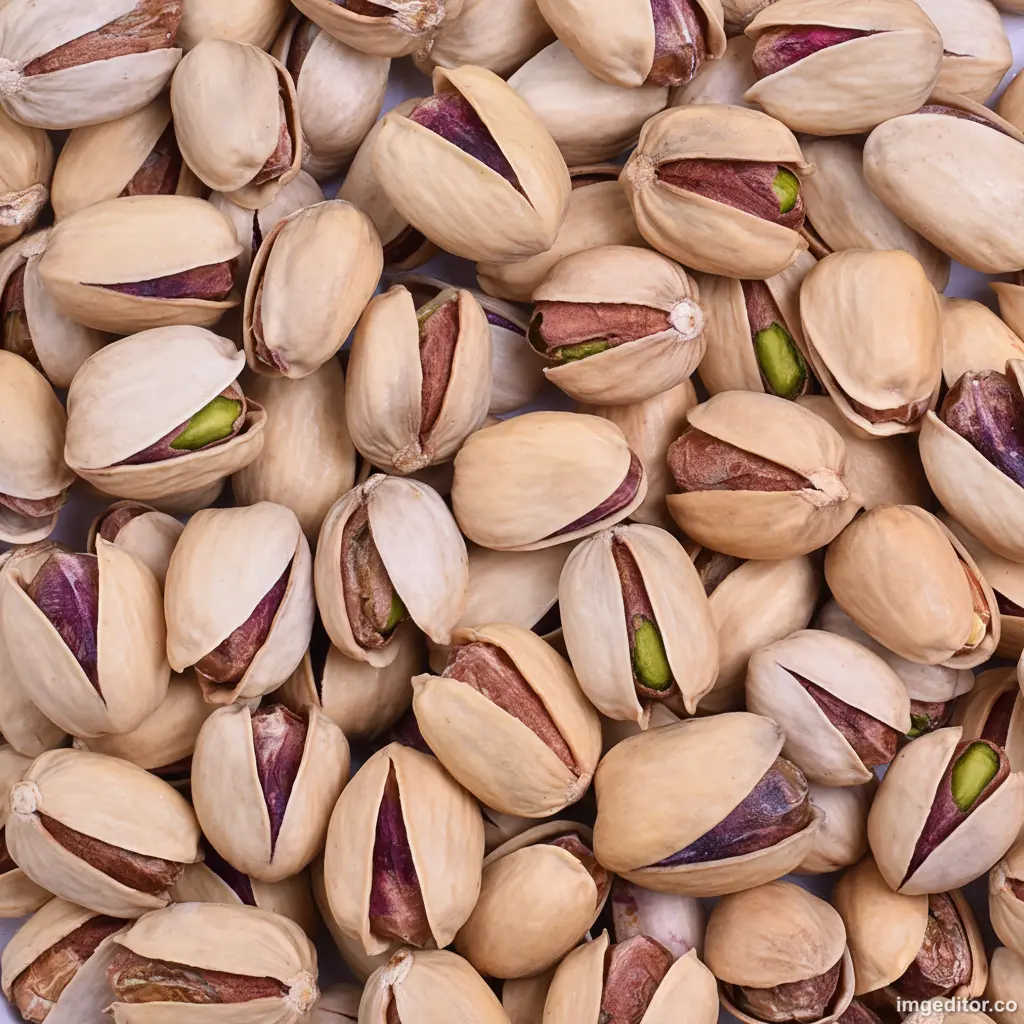
Mechanically opened pistachios start as closed-shell nuts harvested before their shell could split naturally. To prevent waste, processors use specialized equipment to carefully crack these shells after harvest. This crucial step ensures every nut can be eaten, making the overall crop more sustainable and affordable, though the opening itself is man-made.
Pros and Cons of mechannically opened pisatchios
| Comparison Aspect | Mechanically Opened Pistachios | Naturally Opened Pistachios |
|---|---|---|
| Opening Process | Requires external mechanical force (water, heat, or pressure) to induce shell fracture | Shell splits naturally along the suture line during maturation on the tree |
| Target Product | Closed-shell ("non-split") pistachios that did not open naturally | Pistachios that have naturally dehisced prior to harvest |
| Kernel Integrity | Higher risk of physical damage (crushing, bruising) during forced opening | Superior kernel integrity; undamaged nut separates cleanly from shell |
| Shell Consistency | Shells may exhibit irregular, jagged, or multiple fracture points | Clean, predictable split along single seam; aesthetically uniform |
| Production Yield | Enables utilization of entire harvest, including unmarketable closed-shell nuts | Only portion of total harvest (typically 70-90% for commercial varieties) |
| Labor & Equipment | Requires additional processing steps, equipment, labor, and energy input | No post-harvest opening required; reduced processing complexity and cost |
| Consumer Experience | Shells may be harder to open by hand; potential for damaged kernels | Easy "two-finger" opening; consistent, enjoyable snacking experience |
| Food Safety | Risk of contamination if wet methods used without proper drying | Lower risk as shells remain dry and intact until naturally split |
| Economic Value | Lower market value; often sold as lower-grade or for industrial use | Higher market value; premium product sold for direct snacking |
| Shelf Stability | Potentially reduced if residual moisture remains post-processing | Optimal, as intact, dry shell protects kernel until consumption |
Mechanical and natural pistachio opening methods represent two distinct approaches with significant trade-offs. Natural opening, where the shell splits on the tree, produces a premium product characterized by superior kernel integrity, easy “two-finger” opening, clean shell splits, and higher market value. In contrast, mechanical opening uses force (water, heat, or pressure) on closed-shell pistachios, enabling utilization of the entire harvest but with compromises: higher risk of kernel damage, irregular shell fractures, additional processing costs, potential food safety concerns, and lower economic value. While mechanical processing maximizes yield from what would otherwise be unmarketable nuts, natural opening delivers the optimal consumer experience and shelf stability, commanding a premium as the preferred choice for direct snacking.
Key Differences between mechanically and naturally opened pistachios
Grading, Price, and Perception
Within the industry, a high percentage of natural splits is a primary indicator of top quality. Premium-grade pistachios command higher prices and are typically what you find in gourmet snack aisles. Mechanically opened nuts are a practical and cost-effective solution, often used in bulk ingredients or value-brand products, ensuring the entire crop is utilized.
Flavor, Size, and Texture
Natural Pistachios: The full maturity associated with a natural split often leads to a richer, more robust flavor and a consistently plump, crisp kernel. They are typically larger and have a more uniform appearance.
Mechanical Pistachios: Because this category includes nuts that closed before full maturity, the kernel size and flavor intensity can be more variable. While many taste excellent, the consistency within a bag may not match that of a premium natural batch.
Flavor, Size, and Texture
Natural Pistachios: Feature a smooth, wide split. They are famously easy to open by hand—usually with a simple twist—making them a convenient, hassle-free snack.
Mechanical Pistachios: The artificial split can be narrower or less uniform. You may occasionally need a nutcracker or more finger pressure, which can slightly slow down your snacking pace.
Methods for the Mechanical Opening pistachios
For operations seeking to process closed-shell pistachios, several mechanical methodologies are available. Each technique presents distinct advantages and operational considerations. The following outlines three primary approaches to facilitate shell dehiscence.
Hydro-Mechanical
(Cold Water Method )
This technique utilizes the hygroscopic expansion of the shell material to induce fracture along the natural suture.
Procedure:
- Subject the closed-shell pistachios to a thorough cleaning and preliminary drying cycle.
- Immerse the nuts in a vessel containing cold, potable water for a duration not exceeding 24 hours.
- Following immersion, extract the pistachios and transfer them to a drying apparatus or arrange them in a single layer for complete desiccation via ambient air circulation.
Operational Advantages:
- Low technological and capital expenditure requirements.
- Minimal risk of thermal damage to the kernel integrity.
Operational Constraints:
- Extended processing timeline.
- Necessitates rigorous hygiene protocols and subsequent thorough drying to prevent microbial proliferation.
Critical Parameters:
- Utilize purified or previously boiled and cooled water.
- Adhere strictly to the 24-hour immersion maximum.
- Ensure pistachios achieve complete dryness post-processing.
Thermo-Mechanical
(Controlled Heat Method)
This method employs thermal energy to reduce shell toughness and promote fracturing, offering a reduced processing time compared to hydro-mechanical techniques.
Procedure (Steam Application):
- Clean and dry the batch of closed-shell pistachios.
- Introduce the nuts to a steaming chamber or suspend them above boiling water within a sealed vessel for approximately 15 minutes.
- Remove the pistachios and subject them to a controlled cooling and drying phase.
Operational Advantages:
- Significantly reduced processing time relative to cold immersion.
- Lower risk of product spoilage due to shortened wet-state exposure.
Operational Constraints:
- Requires dedicated equipment (e.g., steam chambers, specialized commercial openers).
- Imperative to maintain precise temperature control to preserve kernel quality.
Critical Parameters:
- Employ calibrated and reputable equipment.
- Adjust thermal settings in strict accordance with manufacturer specifications.
- Monitor the process to prevent excessive heat exposure and kernel degradation.
Direct Fracture
(Tool Implementation)
This approach involves the application of localized compressive force via a dedicated tool to cleave the shell along its seam.
Procedure:
- Prepare a batch of cleaned, dry, closed-shell pistachios.
- Sequentially position individual nuts within the jaws of a purpose-built pistachio-opening tool.
- Apply calibrated pressure until an auditory or tactile indication of shell fracture is perceived.
- Remove the opened nut and proceed to the next unit.
Operational Advantages:
- Immediate processing with no requisite pre-treatment (e.g., soaking, heating).
- High degree of portability and simplicity.
Operational Constraints:
- Requires procurement of specialized manual tools.
- Incorrect tool use or excessive force can compromise kernel integrity.
Critical Parameters:
- Select robust, high-quality tools designed for this specific application.
- Operators must exercise controlled pressure to target the shell without damaging the internal kernel.
Which Pistachio is Better?
There isn’t a single “best” type, but there is a best choice for your purpose.
- Choose naturally opened pistachios for a superior, convenient snacking experience and when you prioritize consistent, gourmet flavor and texture.
- Choose mechanically opened pistachios for excellent value, reducing food waste, and for bulk cooking applications where the shell opening method is less important than the kernel itself.
By understanding these differences, you can confidently select the perfect pistachio, whether you’re looking for a simple, satisfying snack or a key ingredient for your next culinary creation.